
How to Stop Overthinking Your Relationship
If you want to learn how to stop overthinking relationships, you can't just tell your mind to stop — but you can retrain it. Relationship overthinking thrives on uncertainty and the anxious urge to chase certainty. This guide shows the practical moves that quiet the loop, and the free test maps the attachment pattern driving it.
❤️ Relationship Patterns Test
Which attachment style are you?
Your attachment style influences how you trust, love, and respond to closeness. Take this free attachment test to discover your unique relationship pattern in about 2 minutes.




Trusted by 25,000+ people
- Everything you share is processed securely.
- We never publish your quiz answers, conversations, or uploaded screenshots.
- No account required.
❤️ Built From a Real Relationship
Created by someone who experienced an anxious–avoidant relationship firsthand.
Read the story →Four attachment styles
Discover Your Attachment Style
Secure
Comfortable with intimacy and independence.
Anxious
Seek closeness, often worry about abandonment.
Avoidant
Value independence, feel uncomfortable with closeness.
Fearful Avoidant
Desire intimacy but fear getting hurt or overwhelmed.
Where science meets AI
An attachment style test, personalized by AI
Classic attachment theory, scored the research-backed way — then an AI model writes a report that is yours alone.
Grounded in attachment theory
Scored the same way psychologists have studied for decades — across secure, anxious, avoidant, and fearful-avoidant patterns.
Personalized by AI
Your answers become a custom report: a relationship overview, your strengths, your triggers, and steps toward more secure attachment.
Free and private
No signup, no paywall. Take the attachment style test in about two minutes.

Why you can't 'just stop' overthinking
Overthinking isn't a discipline problem — it's a nervous-system problem. When closeness once felt uncertain, your mind learned to scan for threat as a way to stay safe, and each 'check' delivers a hit of false certainty that reinforces the loop. That's why willpower fails and why the real fix is changing what your nervous system treats as dangerous. The test shows whether an anxious attachment pattern is the engine behind yours.
The four styles
Which attachment style are you?
Attachment theory describes four patterns of connecting. The test shows where you land across all of them.
Comfortable with closeness
You trust easily, communicate needs openly, and balance intimacy with independence.
Craving reassurance
You long for closeness and worry about partners pulling away; reassurance calms you.
Valuing independence
Self-reliance feels safer than intimacy; you may withdraw when emotions run high.
Wanting and fearing closeness
You desire connection but fear being hurt, which can create a push-pull dynamic.
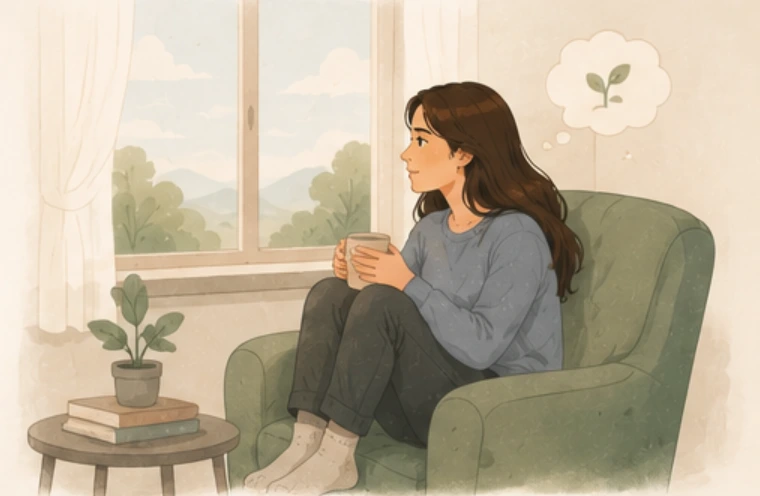
Practical ways to stop overthinking your relationship
You break the loop in small, repeatable steps: name the thought as a pattern instead of a prediction, pause for a set window before reacting, ground in one present fact, and let uncertainty sit without chasing reassurance. Each time the spiral rises and you don't feed it, it weakens. Repair quickly after a spike, and over time closeness stops feeling like something you must monitor.
How it works
Three steps to clarity
No fluff — just a clear path from questions to insight.
Answer the questions
Respond honestly to a short set of relationship scenarios. There are no right answers.
We analyze your pattern
Your responses are mapped across the four attachment dimensions to find your style.
Learn and grow
Get a clear result with practical tips for healthier, more secure relationships.
What helps
What this guide walks you through
The patterns and steps behind learning how to stop overthinking relationships.
Why the urge to check feels like relief in the moment — and keeps the loop alive.
How to sit with uncertainty long enough for the anxious spike to pass.
Small daily habits that slowly retrain your nervous system toward secure.
What people learned
Real notes from people who quieted the loop.
“I kept trying to just stop. Once I saw it as an attachment pattern, I finally had steps that worked.”
“Letting uncertainty sit was the hardest part — and the part that changed everything.”
“I stopped checking and rechecking. The relationship didn't fall apart; it got steadier.”
FAQ
How to stop overthinking relationships — frequently asked questions
Everything worth knowing before you start.
Related guides
Go deeper into anxiety & overthinking
Start with the pattern
See where you land across the four attachment styles — and get steps tailored to you. Free, private, and personalized with AI.